28 February 2009


27 February 2009
A boogie fling moment*
In which I am tempted to throw away everything AND I MEAN EVERYTHING in the house right now AND I MEAN RIGHT NOW because it's making me totally crazy AND I MEAN TOTALLY CRAZY .
*"Boogie fling," obviously, being a term stolen from Flylady. 'Sokay; she's got good cheer enough and to spare.
*"Boogie fling," obviously, being a term stolen from Flylady. 'Sokay; she's got good cheer enough and to spare.
Caw! Ha, ha! Caw!
Did you ever notice how, on Dad's day off, the noise in the living room evokes a coastal feeding frenzy?
 Throw me next, Dad! Throw me!
Just curious.
 Throw me next, Dad! Throw me!
Just curious.
26 February 2009
Why didn't Milton just look harder for Paradise?
I found myself to be a local literary genius back in public high school when I could out-analyze my classmates on any text with virtually no effort. My secret was that I could recognize a Christian allegory or biblical allusion a mile off. Thank you, pious family and Lutheran K-8.
I've been entertained recently by the religious illiteracy of the mainstream media. NPR explained a few mornings ago that Abraham Lincoln "was martyred after his assassination." How's that? I've also been working through Barbara Kingsolver's Animal, Vegetable, Miracle. Smart lady (if you can overlook her endless gratuitous digs at stereotyped people of faith), but confused. For example, when the tomatoes were coming fast and furious, her neighbor saw her hauling them into the house unassisted and made a remark which she heard as, "The harvest is bountiful but the labors few." She thought he was saying that it's not hard to gather ripe tomatoes. That's laborers, Barb. Your neighbor was being sympathetic. The distinction could easily be lost on the unsuspecting ear, but it's too bad you (and apparently all your pre-publication readers and editors, also) are too enlightened to be familiar with a line from Heilige Schrift anyone in Christendom, believers or not, would have immediately recognized 50 years ago.
What meaningful, universal allusions remain in the post-Christian era, when the only thing people know from the Bible is "Judge not, lest ye be judged"? Our literati don't just fail to use Christian allusion, they fail to perceive it.
I've been entertained recently by the religious illiteracy of the mainstream media. NPR explained a few mornings ago that Abraham Lincoln "was martyred after his assassination." How's that? I've also been working through Barbara Kingsolver's Animal, Vegetable, Miracle. Smart lady (if you can overlook her endless gratuitous digs at stereotyped people of faith), but confused. For example, when the tomatoes were coming fast and furious, her neighbor saw her hauling them into the house unassisted and made a remark which she heard as, "The harvest is bountiful but the labors few." She thought he was saying that it's not hard to gather ripe tomatoes. That's laborers, Barb. Your neighbor was being sympathetic. The distinction could easily be lost on the unsuspecting ear, but it's too bad you (and apparently all your pre-publication readers and editors, also) are too enlightened to be familiar with a line from Heilige Schrift anyone in Christendom, believers or not, would have immediately recognized 50 years ago.
What meaningful, universal allusions remain in the post-Christian era, when the only thing people know from the Bible is "Judge not, lest ye be judged"? Our literati don't just fail to use Christian allusion, they fail to perceive it.
25 February 2009
We all fall down
I always feel like an overtired kid at bedtime on Ash Wednesday. Here comes Mother Church to pick me up out of the gluttony and sloth I'm too exhausted to get myself out of any more. Although I'll whine and fight it and possibly try to make a break down the hallway around Judica, I'm really so relieved. Flesh, lights out!
(Since it's been a while, here's the Rule of our peculiar Order for fasting, if we were an Order which we aren't and had a Rule which we don't.)
(Since it's been a while, here's the Rule of our peculiar Order for fasting, if we were an Order which we aren't and had a Rule which we don't.)
Because it's a tradition now
from T.S. Eliot's Ash Wednesday
Because I do not hope to turn again
Because I do not hope
Because I do not hope to turn
Desiring this man's gift and that man's scope
I no longer strive to strive towards such things
(Why should the agèd eagle stretch its wings?)
Why should I mourn
The vanished power of the usual reign?
Because I do not hope to know
The infirm glory of the positive hour
Because I do not think
Because I know I shall not know
The one veritable transitory power
Because I cannot drink
There, where trees flower, and springs flow, for there is nothing again
Because I know that time is always time
And place is always and only place
And what is actual is actual only for one time
And only for one place
I rejoice that things are as they are and
I renounce the blessèd face
And renounce the voice
Because I cannot hope to turn again
Consequently I rejoice, having to construct something
Upon which to rejoice
And pray to God to have mercy upon us
And pray that I may forget
These matters that with myself I too much discuss
Too much explain
Because I do not hope to turn again
Let these words answer
For what is done, not to be done again
May the judgement not be too heavy upon us
...
If the lost word is lost, if the spent word is spent
If the unheard, unspoken
Word is unspoken, unheard;
Still is the unspoken word, the Word unheard,
The Word without a word, the Word within
The world and for the world;
And the light shone in darkness and
Against the Word the unstilled world still whirled
About the centre of the silent Word.
O my people, what have I done unto thee.
Where shall the word be found, where will the word
Resound? Not here, there is not enough silence
Not on the sea or on the islands, not
On the mainland, in the desert or the rain land,
For those who walk in darkness
Both in the day time and in the night time
The right time and the right place are not here
No place of grace for those who avoid the face
No time to rejoice for those who walk among noise and deny the voice
...
Teach us to care and not to care
Teach us to sit still
Even among these rocks,
Our peace in His will
Because I do not hope to turn again
Because I do not hope
Because I do not hope to turn
Desiring this man's gift and that man's scope
I no longer strive to strive towards such things
(Why should the agèd eagle stretch its wings?)
Why should I mourn
The vanished power of the usual reign?
Because I do not hope to know
The infirm glory of the positive hour
Because I do not think
Because I know I shall not know
The one veritable transitory power
Because I cannot drink
There, where trees flower, and springs flow, for there is nothing again
Because I know that time is always time
And place is always and only place
And what is actual is actual only for one time
And only for one place
I rejoice that things are as they are and
I renounce the blessèd face
And renounce the voice
Because I cannot hope to turn again
Consequently I rejoice, having to construct something
Upon which to rejoice
And pray to God to have mercy upon us
And pray that I may forget
These matters that with myself I too much discuss
Too much explain
Because I do not hope to turn again
Let these words answer
For what is done, not to be done again
May the judgement not be too heavy upon us
...
If the lost word is lost, if the spent word is spent
If the unheard, unspoken
Word is unspoken, unheard;
Still is the unspoken word, the Word unheard,
The Word without a word, the Word within
The world and for the world;
And the light shone in darkness and
Against the Word the unstilled world still whirled
About the centre of the silent Word.
O my people, what have I done unto thee.
Where shall the word be found, where will the word
Resound? Not here, there is not enough silence
Not on the sea or on the islands, not
On the mainland, in the desert or the rain land,
For those who walk in darkness
Both in the day time and in the night time
The right time and the right place are not here
No place of grace for those who avoid the face
No time to rejoice for those who walk among noise and deny the voice
...
Teach us to care and not to care
Teach us to sit still
Even among these rocks,
Our peace in His will
24 February 2009
Last chance!
Hello, Church, here's a song that we're singin',
C'mon get shriven
A whole lotta pardon is what He'll be bringin',
He'll make you shriven
We had a dream we'd go confessin' together
We'd get some Absolution then we'd keep movin' on
We'd blow through the pantry and the freezer together
We're all feelin' sick by evening on Mardi Gras
Eatin' along there's a song that we're singin',
C'mon get shriven
A whole lotta pardon is what He'll be bringin',
He'll make you shriven
He'll make you shriven
He'll make you shriven
23 February 2009
The stork is dead, long live the stork!
Problem: My oldest daughter wants to know how the baby will escape from prison. I don’t think she needs to know.
Discuss.
I understand that for many (sane) parents this is not an issue. The kid wants to know? Tell her! The end. Experts agree, and good, loving parents the nation over host “Birth: How It Happens” seminars for their wide-eyed, inquisitive children.
 When fired from the baby delivery route,
While I truly admire parents for being frank and get that experts are paid for their opinions, I just don’t like the way this thing usually goes down. From what I’ve seen, forward conversations about birth leave kids terrified and bewildered. Come to think of it, those conversations usually leave me terrified and bewildered. Let’s just say the doctor brings me the baby in her fancy black bag, OK? I’m happy with that. On the one hand, I want to be direct with my babies and explain things correctly before Someone Else usurps the privilege. But on the other hand . . .
Birth is a technical process, true, and as a technical process not that hard to explain. But it’s ever so much more than a technical process—the horrible suffering, the strange beauty, the awful mortification and the soaring joy of birth cannot be explained in a cursory casting about of medical terminology and charts. What's more, children intuit some, but not enough of what lies behind the technical diagramming—hence their terror. Even when taught Latin words and Grey’s Anatomy, they don’t understand. How could they? So, why not save the sticky stuff ‘til later?
I’d rather my children laugh at my belly until it’s time to wonder at their new sibling, and call it a day. My little people are still pretty little; we’ll slouch toward the in-depth seminars slowly: first crawl, then walk, then run, with information sufficient to each stage. In the meantime, how did those of you with older children handle explaining birth (just birth, really; we can discuss the other side of this coin some other time)? Be warned, everything you say can and will be stolen. ;)
Discuss.
I understand that for many (sane) parents this is not an issue. The kid wants to know? Tell her! The end. Experts agree, and good, loving parents the nation over host “Birth: How It Happens” seminars for their wide-eyed, inquisitive children.
 When fired from the baby delivery route,
he had to find something to do
While I truly admire parents for being frank and get that experts are paid for their opinions, I just don’t like the way this thing usually goes down. From what I’ve seen, forward conversations about birth leave kids terrified and bewildered. Come to think of it, those conversations usually leave me terrified and bewildered. Let’s just say the doctor brings me the baby in her fancy black bag, OK? I’m happy with that. On the one hand, I want to be direct with my babies and explain things correctly before Someone Else usurps the privilege. But on the other hand . . .
Birth is a technical process, true, and as a technical process not that hard to explain. But it’s ever so much more than a technical process—the horrible suffering, the strange beauty, the awful mortification and the soaring joy of birth cannot be explained in a cursory casting about of medical terminology and charts. What's more, children intuit some, but not enough of what lies behind the technical diagramming—hence their terror. Even when taught Latin words and Grey’s Anatomy, they don’t understand. How could they? So, why not save the sticky stuff ‘til later?
I’d rather my children laugh at my belly until it’s time to wonder at their new sibling, and call it a day. My little people are still pretty little; we’ll slouch toward the in-depth seminars slowly: first crawl, then walk, then run, with information sufficient to each stage. In the meantime, how did those of you with older children handle explaining birth (just birth, really; we can discuss the other side of this coin some other time)? Be warned, everything you say can and will be stolen. ;)
22 February 2009
Pañales con queso
The Esquimeaux or the Sami or whoever it is have 37 words for snow; and I, I have 37 words for what is multifariously extruded from the caudal regions of a child.
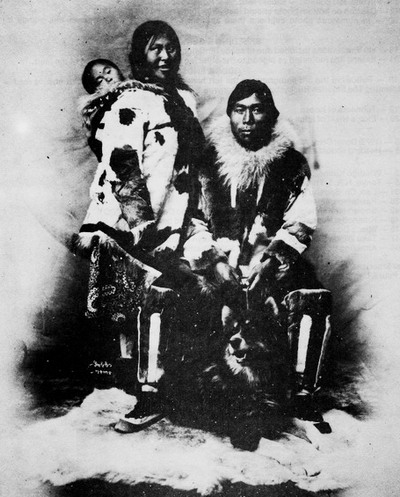 "Hey, we should call them mukYUKs!"
"Hey, we should call them mukYUKs!"20 February 2009
Opera for your Friday
German and English from here. Sorry for the French subtitles, but this is the best one and you deserve the best.
Papageno
Klinget, Glökkchen, klinget! Bringt mein Weibchen her,
Bringt sie her! Mein Mädchen her! Mein Weibchen her!
Ring, little bells, ring! Bring my little wife here,
Bring her here! My maiden here, my little wife here!
3 Spirits
Nun, Papageno, sich dich um!
Now, Papageno, look around you!
Papageno und Papagena
Pa-pa-pa, pa-pa-pa-Papageno/Pa-pa-pa-, pa-pa-pa,-Papagena
PAPAGENO
Bist du mir nun ganz ergeben,
Have you now yielded to me?
PAPAGENA
Nun bin ich dir ganz ergeben.
Now I have yielded to you.
PAPAGENO
Nun, so sei mein liebes Weibchen!
Now, then be my dear little wife!
PAPAGENA
Nun, so sei mein Herzenstäubchen,
Now, then be the dove of my heart,
PAPAGENO
Mein liebes Weibchen, mein Herzenstäubchen,
My dear little wife, dove of my heart!
PAPAGENO UND PAPAGENA
Welche Freude wird das sein, Wenn die Gotter uns bedenken
Unsrer Liebe Kinder schenken So liebe kleine Kinderlein, Kinderlein
So liebe kleine Kinderlein.
Erst einen kleinen Papageno
Dann eine kleine Papagena,
Dann wieder einen Papageno
Dann wieder eine Papagena,
Papageno, Papagena, Papageno, Papageno, Papagena, Papageno
Es ist das hochste der Gefuehle,
Wenn viele, vie der pa-pa-pageno(a) Der Eltern Sorgen werden sein.
What joy that will be if the gods think of us, And give us children of our love
Such dear little children, little children, Such dear little children.
First a little Papageno,
Then a little Papagena,
Then again a Papageno,
Then again a Papagena
It is the highest of feelings, if many [of them] to Papageno(a) will be In the care of their parents.
Subscribe to:
Posts (Atom)